Thursday, May 7, 2015

7th Annual UU Native Plant Swap and Sale May 9th

The 7th annual UU Native Plant Swap and Sale will be help this Saturday, May 9th from 9-2 at the UU Center on the corner of Liebig and Pomona Rds. This event just gets better with age like wine. Native plant enthusiasts bring their extra "volunteer" native plants to exchange for others. Here's how it works: the first two plants cover the price of admission, then for each additional plant you get a ticket to turn in for another. You go about the tables, adding plants to your tray. Then go to the checkout and "pay" for the plants with your tickets. There is a limit of ten tickets per person, but you can also buy additional plants from the tables. I recommend bringing 12 plants so you can get 10 tickets.

Also I have a table there with my plants for sale as a fundraiser I do each year for the congregation. Plants at my table are $4.75 each including tax. With any purchase of 5 or more plants, you get a free packet of Common Milkweed seeds.

Here is a list of what I will be bringing:

Boneset
Blue Vervain                                                    
Turtlehead
Sundrops
Swamp Milkweed (limited)
Columbine
Liatris
Orange Coneflower
Purple Coneflower

Cattails
Seashore Mallow
Seaside Goldenrod 
Prickly Pear
Little Bluestem
Switch Grass
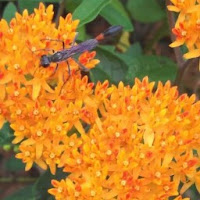
Butterflyweed
Blue Eyed Grass
Sticky Catchfly
Creeping Phlox
Wild Stonecrop

As always advice is free, and myself, Jesse and Barbara are always happy to give it. So come on out and support this great cause. Pick up something for Mother's Day. Proceeds go to the center, a beautiful GREEN building. You can also see the native plant gardens on the site, maintained by members of the congregation. Hope to see you there.

Friday, April 24, 2015

Come Celebrate Earth Day at ACUA's 25th Anual Earth Day Festival April 26 10am-4pm

This year is a milestone for ACUA's annual Earth Day Festival. The event has been held for 25 years in April rain or shine. I have always loved the festival. I used to attend it with my grandmother back in my younger days. It was here that I first met Howard Boyd, author of "Wildflowers of the Pine Barrens of New Jersey", which I purchased from him and he signed the copy for me. I became a vendor when I started raising native plants in 2005. For several years I have done workshops on native plants and will be again this year, only with a different touch. I will be talking about native plants for pollinators. Because our pollinators are declining, I felt it was important to talk about how we can use native plants to help sustain them.

I usually include a handout with  coupon good at my table. This year the coupon will be for a packet of Common Milkweed seeds. Milkweed is the only larval host plant for Monarch butterflies. I will also be selling Swamp Milkweed.

I will also have the following plants available: 
Blazing Star
Turtlehead
Eastern Columbine
Common Milkweed
Boneset
Smooth Blue Aster
Maryland Golden Aster
Silene caroliniana, Sticky Catchfly
New England Aster
Orange Coneflower
Narrow Leaved Cattail
Sneezeweed
Slender Blue Flag
Goat's Beard
Creeping Phlox
Sticky Catchfly
Wild Stonecrop

The Sticky Catchfly is a new one I am carrying this year. I bought my first one at Bowman's Hill. I love this little plant as it is small for the front of the border, early and a long bloomer. It makes a nice splash of pink in a rock garden. I was able to source some so I will have it available for sale.

Hopefully the weather will be nice, not too hot or cold. But the festival goes in all kinds of weather so come on out and hear why our native bees are so important and how you can help them thrive. There will also be other workshops of interest like organic gardening, permaculture, backyard chickens and rain barrels as well as local environmental organizations, live music and good food. Check this Twitter hashtag to see more info. #ACUAEarthDay.  Hope to see you there.

Saturday, April 18, 2015

Earth Day Plant and Pollinator Area Presentations


I wanted to let you know about some upcoming presentations in the region, given by Daniel Duran, Assistant Professor at Drexel University, on some relevant topics related to native plants. Dan also teaches a native plant college course at Drexel University.


Wednesday, April 22 (Earth Day), 4-5pm
Sponsored by the Drexel Sierra Club
Drexel University, Papadakis Integrated Sciences Bldg, Rm 104
"Assessing the real and perceived environmental impacts of Genetically Modified Organisms (GMOs)"


Wednesday, April 22 (Earth Day), 7-8pm
The 5 B's Lecture Series
Radnor Memorial Library, Wayne, PA
http://www.thefivebs.org/programs.html
"Backyard butterflies, beetles, and other pollinators"

Saturday, April 4, 2015

Milkweeds are coming.

Each year I try to increase the amount of Milkweeds I grow as they are essential to the Monarchs. As I only grow local eco-types of our regional South Jersey plants, all are done fresh from seed each year. I have grown Asclepias incarnata, (Swamps) Asclepias syriaca (Common) and Asclepias tuberosa, (Butterfly)all quite successfully.


Blunt Leaf Milkweed in Egg Harbor TWP
 In the past I have tried to grow, but was unsuccessful, Asclepias amplexicaulis, ( Blunt Leaf Milkweed), not as common, but not rare. This year, I am happy to report that it did germinate and as of today there are twelve seedlings in the tray and I hope for many more. This plant is growing on my brother's property in Dorothy so it is a local Atlantic County eco-type.  I did sew the Swamps quite heavily and they have germinated and are growing rapidly. I potted up two trays today to have ready for the Earth Day festival at ACUA. I am hoping to have the Common as well, as they sprouted right behind them. The Butterflyweed are coming along a bit more slowly, but they are germinated. I doubt they will be ready for Earth Day, but should be ready by late May. The great thing about Milkweeds is that once potted up, they grow quickly.

If you are looking for Milkweeds, I am planning on bringing extra to the festival this year so I don't run out.  Also I will be giving a talk on Pollinators at 1pm. If you come to my talk I will give you a coupon for a free pack of Common Milkweed seeds with any purchase of 3 or more native plants of any species. I will also be bringing Asters and Seaside Goldenrod which is important food for the Monarchs on migration in the fall.

One thing to remember about Milkweeds and Monarchs is that the leaves are much more important than the flowers. So while the flower provides nectar for all butterflies as well as native bees, the leaves are what the Monarch caterpillars consume. Swamp and Common are the best choices here for the sizable leaves they provide.
Swamp Milkweed provides food for
 Bumble Bees as well as Monarchs

What I love about the Swamps is the beautiful flowers that attract so many pollinators especially Bumble bees. Bumble bees are in trouble as much or more even than honey bees. So in addition to helping Monarchs, you can help the Bumble Bees as well.  I will be talking about that at my presentation. Hope to see you  there.

Tuesday, March 31, 2015

Early Signs of Spring

The calendar says Spring has arrived 10 days ago, but it sure doesn't feel that way. With night time temperatures still in the 20s some nights, it almost feels hopeless. Yet, plants are slowly emerging from the ground, showing greenery even if they do nothing more than just sprout. Aside from that, there are other telltale signs. Today while working on trays in my little unheated greenhouse it warmed up to nearly 70 degrees inside. That felt nice. Earlier in the week on warmer nights I heard the Spring Peepers. Just yesterday morning, I saw my first Bluebird and flock of Pine Warblers for this year. So birds are singing  and on the move, frogs are emerging, along with the Daffodils. Daylight in the early evening. All good signs. I am hoping to see the return of "Rana" my resident Green Frog from last year. She is quite a ham and doesn't mind my getting close to photograph her. She is just adorable and loves to hang out in the bog and nursery pots.
Rana, playing peekaboo.

I am surveying the property to see where I would like to expand the nursery area. I am hoping to have larger size plants in a few species this year as well as a few shrubs and trees. I plan to expand the pollinator garden and install Bluebird nest boxes. There is much work to be done, but I am up to it. Now if it would just get warm......

Update 4/6/2015: I saw my first Mourning Cloak in the back yard yesterday. There was one in the same vicinity last year as well, so I am thinking they may have a favored hibernation spot here.

Sunday, March 8, 2015

Its 2015. Can We Get Some Spring Please?


My pollinator garden, installed in July 2014

Having just been assaulted by another seven inches of snow, I am wondering if spring will ever get here. With so much cold and frozen terrain, it can be hard to see the light at the end of the tunnel. I am so tired of winter right now. But spring will come; it always does. And not a moment too soon.

So I am thinking about what I will be focusing on the for coming year and what I really feel is important is to focus on pollinators. My impromptu pollinator garden on my new property was surprisingly successful last year, having only been installed in July. By August, it was well grown and teeming with bees, wasps, skippers and butterflies and a female hummingbird. I look forward to an even larger area this year as I spent last fall adding to it. This year I plan to finish it with a salt marsh garden. I also began working on the moon garden not too far from it. I am hoping to complete the moon garden this year as well as add on to the organic food garden. 

Looking forward for the year, Monarchs will continue to be a primary area of my focus, but I am also looking to help folks understand the importance of our local native bees. These bees are primary pollinators of our food gardens so for those of us who like to grow some veggies, it is essential that we ensure we have proper habitat for the bees who will do the work for us. I have been reading the book "Attracting Native Pollinators" put out by the Xerces Society. It contains great information on the life cycles, habitat needs and behavior of pollinators. I plan to be doing some workshops based on what I have learned in this text.

I am planning on trying to offer more species of Milkweeds this year as well, including Blunt Leaf Milkweed. In the past I have not had success germinating them, but trying again this year. This looks much like Common Milkweed, only has curly leaves, and shorter. One benefit is that it doesn't spread as much as Common, so it shouldn't be running to the neighbor's yards. I am planning to plant a patch on the back of my property near the border. I have read some articles discouraging the use of Tropical Milkweed, with two reasons cited. One is that it can harbor parasites and second, that the Monarchs tend to love it so much, they don't leave for Mexico in time. So I will continue to check this news and update anything I see.


Pollinator on a Sunflower that grew
from seed from a bird feeder
I am also looking to plant sunflowers this year as I had one come up last year from a feeder seed, which the goldfinches went wild over. But before the seeds were ready, it was enjoyed by many different pollinators. I highly recommend sunflowers in the garden including the annual ones. Last year    the Atlantic City Expressway did a Sunflower wild area that was full of mixed sunflower species. It was beautiful and I always saw goldfinches around it.


So in addition to running the nursery this year, I have a lot on my plate to get my yard more pollinator friendly. All I need is a change in the weather. As I write this, it is time to "spring forward" and move the clocks ahead tonight. That is encouraging. Spring is just around the corner....I just know it.

Tuesday, September 9, 2014

August 2014 Plant of the month New York Ironweed, Vernonia noveboracensis


I first saw New York Ironweed along Absecon Creek and recognized it from a field guide. I had been exploring a roadside brackish marsh which was teaming with flowering natives. I later discovered it along the Great Egg Harbor and two years ago again on the Mullica. I was awed by how tall it was and the rich dark purple flowers, I suppose you could nick name it "Deep Purple."


In the asteracae family, its 3" - 5" flat cluster flower heads attract many kinds of pollinators including birds, bees, butterflies and skippers. The plant can grow from 3 to 7 feet high and tolerate a variety of soils. The fact that I have seen it along coastal rivers indicates that it tolerates brackish conditions. I have also seen it on display at the Pinelands Preservation Alliance's native Plant garden under dryer conditions and it seemed to do well. But I think it is most content to be in moist, sunny areas. I have seen it blooming in the various locations throughout the month of August.


A mass planting in a garden

I have grown this plant from seed with mixed success. Some years I have had an abundant crop, other years it was scarce. I have experimented with cuttings also, and have found mixed results. I prefer seed propagation over cuttings, since I have found that the can bloom the first year from seed if given room to grow and plenty of sun and water.


Try this plant for back of the border where you want something tall. I blends well with companion plants, Cardinal Flower, Sneezeweed, Narrow Leaf Sunflower and Marsh Rattlesnake Master which make for a colorful display. In a moist, sunny location you should have beautiful results.