Wednesday, June 10, 2015

Dr. Dan Duran Talks About Native Plants for Food 6/15/15

Here is an announcement from the South East Chapter of the Native Plant Society of NJ for the June meeting which will feature Dr. Dan Duran as the Speaker on growing native plants for food.

-------------------------------------------------------------------------------------------

MONDAY, June 15, 2015, 7:00 PM

We are excited about our local NPSNJ chapter that serves native plant enthusiasts in Atlantic County and Cape County as well as anyone from areas west or north who would like to join us. We hold eight evening meetings a year on the 3rd Monday of the month (September, October, November, February, March, April, May, and June). We are delighted that Stockton College’s Sustainability Program – specifically the Campus Farm Native Plant Project – is sponsoring us and making it possible for us to have meetings in an easily-accessible location and a comfortable setting with the necessary “smart room” equipment.

Our June meeting will begin promptly at 7 p.m. Monday, June 15, 2015, in room B-012 at the Richard Stockton College of New Jersey.

Gardening with Native Plants for Food by Daniel Duran

Native plants can be used to improve the ecological value of our landscapes in a variety of ways. One potential benefit that most of us have never considered is the use of our native flora for food.  Dr. Duran will discuss how we can integrate this newly-recognized approach to promoting sustainability into our fruit and vegetable gardens. 

We welcome Dan Duran back to Stockton College where he received a BS in Environmental Sciences. Dan is currently an assistant professor at Drexel University where he teaches a course on Native Plants and Sustainability. He is also adjunct faculty member at the Barnes Foundation Arboretum.

If you would like to be updated with details about our future meetings, please contact Jesse Connor at:  southeast@npsnj.org.  (Contacting this site will put you on the list for monthly meeting information, field trip info, and timely updates.)

Directions to B 012:   Easiest:  park in Parking Lot #1 or #2 and bear right walking down the hill, following the signs to Alton Auditorium. Enter the A-D Building by the main doors across from the Arts & Sciences Building. B-012 is on the ground floor.   Second-Best Route: Park in Parking Lots #3 or #4 and walk through the Campus Center Building, then bear right as you exit.  Go down the hill and enter the A-D building on your left and turn right as you enter.  

We look forward to seeing you there

Jesse Connor, Jack Connor, Barbara Fiedler, and Jean Riling

For more information, contact Jesse Connor, Jack Connor, or Barbara Fiedler at email: southeast@npsnj.org

Thursday, June 4, 2015

Native Plant Sale at the Absecon City-wide Yard sale event. 6/6/15


I will be selling my organic native plants at the Absecon city-wide yard sale, this coming Saturday 6/6/15. As the weather has been quite cool lately, it looks like its still a good time to plant. In addition to plants there will be yard sale items from my family members and lots of other sales nearby if you like yard-sailing, as I call it. Below is a list of what I plan to bring as well as some pictures of  milkweeds as well as plants I am carrying for the first time, Giant Swamp Sunflower, and Sticky Catchfly. And I will bring plenty of Milkweed.

The sale will be held at 703 Ambassador Dr, Absecon, NJ 08201 from 8-4pm on Saturday, 6/6/15. Raindate is Sunday.

Sticky Catchfly
Giant Swamp Sunflower
     
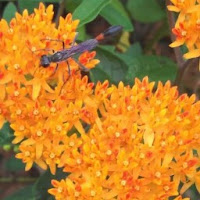
Butterflyweed                 
Swamp Milkweed

Bee Balm
 

Aster novae-angliae - New England Aster

Aster laevis - Smooth Blue Aster

Liatris spicata - Blazing Star

Solidago sempervirens - Seaside Goldenrod

Echinacea purpurea - Purple Coneflower

Helianthus giganteus - Giant Sunflower new 2015

Oenthera fruticosa - Sundrops

Panicum virgatum - Switchgrass

Typha angustifolius - Cattails new 2015

Seashore Mallow

Eupatorium perfoliatum - Boneset

Phlox stolonifera - Creeping Phlox

Silene caroliniana - Sticky Catchfly New 2015

Sedum ternatum - Wild Stonecrop

Lysimachia ciliata - Purple Fringed Loosestrife

Asclepias incarnata - Swamp Milkweed

Prickly Pear Cactus, Opuntia humifusa

Butterflyweed - Asclepias tuberosa

The address is 703 Ambassador Drive Absecon, NJ 08201 which is located in Absecon Estates behind the Shoprite and City Hall/Heritage Park.

Organic vegetable plants will also be available for $1.00 each. 6 pk for $4.00 each. Jalapenos, Lettuce, Scallions, Cilantro, Beefsteak tomatoes, Basil, these are nice size plants, no chemicals.

There will also be household goods for sale, from 2 -3 families.

The weather looks like its going to be splendid, so come on out and find bargains city-wide.


Friday, May 29, 2015

May 2015 Native Plant of the Month - Pink Ladies Slipper (Cypripedium acaule)


As a young girl, I grew up on the edge of the woods. Each summer when school let out I set about the woods behind our yard exploring all there was to see. As an avid gardener even then, there were woodland flowers I grew to love and was fascinated with. One of these was the Pink Lady's Slipper,Cypripedium acaule. It is also known as Moccasin Flower. There was even one growing in our yard for a few years before it disappeared. I also had one at the mobile home for a while and on the grounds of the park there was a wooded area with a nice population along a trail. Now on my new property I have counted 30 so far this year. Some are solitary, others are in larger populations of different ages. The flowering ones are all beautiful this year and I feel blessed they have made there home here. So I have chosen this plant to talk about this month as its mere existence is a perfect example of nature in harmony as it relies on other organisms for survival.

  Sadly I have heard many tales about folks who dug them up from the woods, but the plants did not survive. It is nearly impossible to transplant. I have learned it is better enjoyed where it chooses to show up. The conditions required for it to grow are quite precise. I do not sell or propagate this plant. But I have learned how to keep them if they are already there.  The key to that is to not rake leaves or needles from the area in which they are growing.

The reason for this is because unlike most seeds, orchid seeds do not contain food supplies to nourish the plant until true leaves are formed. So the plant relies on a soil fungus to obtain food. The threads of the fungus break open the seed and attach to it, passing on food and nutrients to the plant. Once the plant is mature enough to produce its own food, the fungus will obtain its nutrients from the roots of the plant. Thus there is a symbiotic relationship between the two.  This fungus, of the Rhizoctonia genus, is found in leaf litter, so not raking the area where the plants are growing is beneficial to both plant and fungus.


 Another interesting this about this plant is that it requires bees for pollination. The plant gives off a scent pleasant to lure bees.The flower has a slit in the very front where only bees strong enough to enter may do so. Once inside, they slit closes  and the bee is trapped. In order to escape, it must move forward to the only exit at the top of the flower. Along the way there are hairs that guide the bee and lead it to the opening, but not until it passes under the stigmas, picking up pollen on its body. When it enters a new flower, that pollen makes contact with stigmas in the next plant and pollination has occurred. At that point, the bee is near the exit and makes its escape. Sounds like something from a movie, right? Truly fascinating.

Lady's Slipper grows 6 to 15 inches tall.The plant consists of only two basal opposite leaves. They are hairy with pronounced veins. The flower stalk is separate with no leaves. At the top is a single flower with a pink pouch that resemble a moccasin or slipper. The pouch contains the slit and may have a darker pink venation which helps guide the bee to the opening. At the top of the flower is another opening from which the bee will exit.

It takes many years for a new plant to flower. In its early years it may be just a leaf or two.  However the plant can live up to 20 years in the wild. So if you are out for a walk in the woods in May or early June, be sure to keep an eye out for this little beauty. If you spot one, it just may become a new friend to go and visit each year.


Thursday, May 7, 2015

7th Annual UU Native Plant Swap and Sale May 9th

The 7th annual UU Native Plant Swap and Sale will be help this Saturday, May 9th from 9-2 at the UU Center on the corner of Liebig and Pomona Rds. This event just gets better with age like wine. Native plant enthusiasts bring their extra "volunteer" native plants to exchange for others. Here's how it works: the first two plants cover the price of admission, then for each additional plant you get a ticket to turn in for another. You go about the tables, adding plants to your tray. Then go to the checkout and "pay" for the plants with your tickets. There is a limit of ten tickets per person, but you can also buy additional plants from the tables. I recommend bringing 12 plants so you can get 10 tickets.

Also I have a table there with my plants for sale as a fundraiser I do each year for the congregation. Plants at my table are $4.75 each including tax. With any purchase of 5 or more plants, you get a free packet of Common Milkweed seeds.

Here is a list of what I will be bringing:

Boneset
Blue Vervain                                                    
Turtlehead
Sundrops
Swamp Milkweed (limited)
Columbine
Liatris
Orange Coneflower
Purple Coneflower

Cattails
Seashore Mallow
Seaside Goldenrod 
Prickly Pear
Little Bluestem
Switch Grass
Butterflyweed
Blue Eyed Grass
Sticky Catchfly
Creeping Phlox
Wild Stonecrop

As always advice is free, and myself, Jesse and Barbara are always happy to give it. So come on out and support this great cause. Pick up something for Mother's Day. Proceeds go to the center, a beautiful GREEN building. You can also see the native plant gardens on the site, maintained by members of the congregation. Hope to see you there.

Friday, April 24, 2015

Come Celebrate Earth Day at ACUA's 25th Anual Earth Day Festival April 26 10am-4pm

This year is a milestone for ACUA's annual Earth Day Festival. The event has been held for 25 years in April rain or shine. I have always loved the festival. I used to attend it with my grandmother back in my younger days. It was here that I first met Howard Boyd, author of "Wildflowers of the Pine Barrens of New Jersey", which I purchased from him and he signed the copy for me. I became a vendor when I started raising native plants in 2005. For several years I have done workshops on native plants and will be again this year, only with a different touch. I will be talking about native plants for pollinators. Because our pollinators are declining, I felt it was important to talk about how we can use native plants to help sustain them.

I usually include a handout with  coupon good at my table. This year the coupon will be for a packet of Common Milkweed seeds. Milkweed is the only larval host plant for Monarch butterflies. I will also be selling Swamp Milkweed.

I will also have the following plants available: 
Blazing Star
Turtlehead
Eastern Columbine
Common Milkweed
Boneset
Smooth Blue Aster
Maryland Golden Aster
Silene caroliniana, Sticky Catchfly
New England Aster
Orange Coneflower
Narrow Leaved Cattail
Sneezeweed
Slender Blue Flag
Goat's Beard
Creeping Phlox
Sticky Catchfly
Wild Stonecrop

The Sticky Catchfly is a new one I am carrying this year. I bought my first one at Bowman's Hill. I love this little plant as it is small for the front of the border, early and a long bloomer. It makes a nice splash of pink in a rock garden. I was able to source some so I will have it available for sale.

Hopefully the weather will be nice, not too hot or cold. But the festival goes in all kinds of weather so come on out and hear why our native bees are so important and how you can help them thrive. There will also be other workshops of interest like organic gardening, permaculture, backyard chickens and rain barrels as well as local environmental organizations, live music and good food. Check this Twitter hashtag to see more info. #ACUAEarthDay.  Hope to see you there.

Saturday, April 18, 2015

Earth Day Plant and Pollinator Area Presentations


I wanted to let you know about some upcoming presentations in the region, given by Daniel Duran, Assistant Professor at Drexel University, on some relevant topics related to native plants. Dan also teaches a native plant college course at Drexel University.


Wednesday, April 22 (Earth Day), 4-5pm
Sponsored by the Drexel Sierra Club
Drexel University, Papadakis Integrated Sciences Bldg, Rm 104
"Assessing the real and perceived environmental impacts of Genetically Modified Organisms (GMOs)"


Wednesday, April 22 (Earth Day), 7-8pm
The 5 B's Lecture Series
Radnor Memorial Library, Wayne, PA
http://www.thefivebs.org/programs.html
"Backyard butterflies, beetles, and other pollinators"

Saturday, April 4, 2015

Milkweeds are coming.

Each year I try to increase the amount of Milkweeds I grow as they are essential to the Monarchs. As I only grow local eco-types of our regional South Jersey plants, all are done fresh from seed each year. I have grown Asclepias incarnata, (Swamps) Asclepias syriaca (Common) and Asclepias tuberosa, (Butterfly)all quite successfully.


Blunt Leaf Milkweed in Egg Harbor TWP
 In the past I have tried to grow, but was unsuccessful, Asclepias amplexicaulis, ( Blunt Leaf Milkweed), not as common, but not rare. This year, I am happy to report that it did germinate and as of today there are twelve seedlings in the tray and I hope for many more. This plant is growing on my brother's property in Dorothy so it is a local Atlantic County eco-type.  I did sew the Swamps quite heavily and they have germinated and are growing rapidly. I potted up two trays today to have ready for the Earth Day festival at ACUA. I am hoping to have the Common as well, as they sprouted right behind them. The Butterflyweed are coming along a bit more slowly, but they are germinated. I doubt they will be ready for Earth Day, but should be ready by late May. The great thing about Milkweeds is that once potted up, they grow quickly.

If you are looking for Milkweeds, I am planning on bringing extra to the festival this year so I don't run out.  Also I will be giving a talk on Pollinators at 1pm. If you come to my talk I will give you a coupon for a free pack of Common Milkweed seeds with any purchase of 3 or more native plants of any species. I will also be bringing Asters and Seaside Goldenrod which is important food for the Monarchs on migration in the fall.

One thing to remember about Milkweeds and Monarchs is that the leaves are much more important than the flowers. So while the flower provides nectar for all butterflies as well as native bees, the leaves are what the Monarch caterpillars consume. Swamp and Common are the best choices here for the sizable leaves they provide.
Swamp Milkweed provides food for
 Bumble Bees as well as Monarchs

What I love about the Swamps is the beautiful flowers that attract so many pollinators especially Bumble bees. Bumble bees are in trouble as much or more even than honey bees. So in addition to helping Monarchs, you can help the Bumble Bees as well.  I will be talking about that at my presentation. Hope to see you  there.